Shaped to Follow the Interior
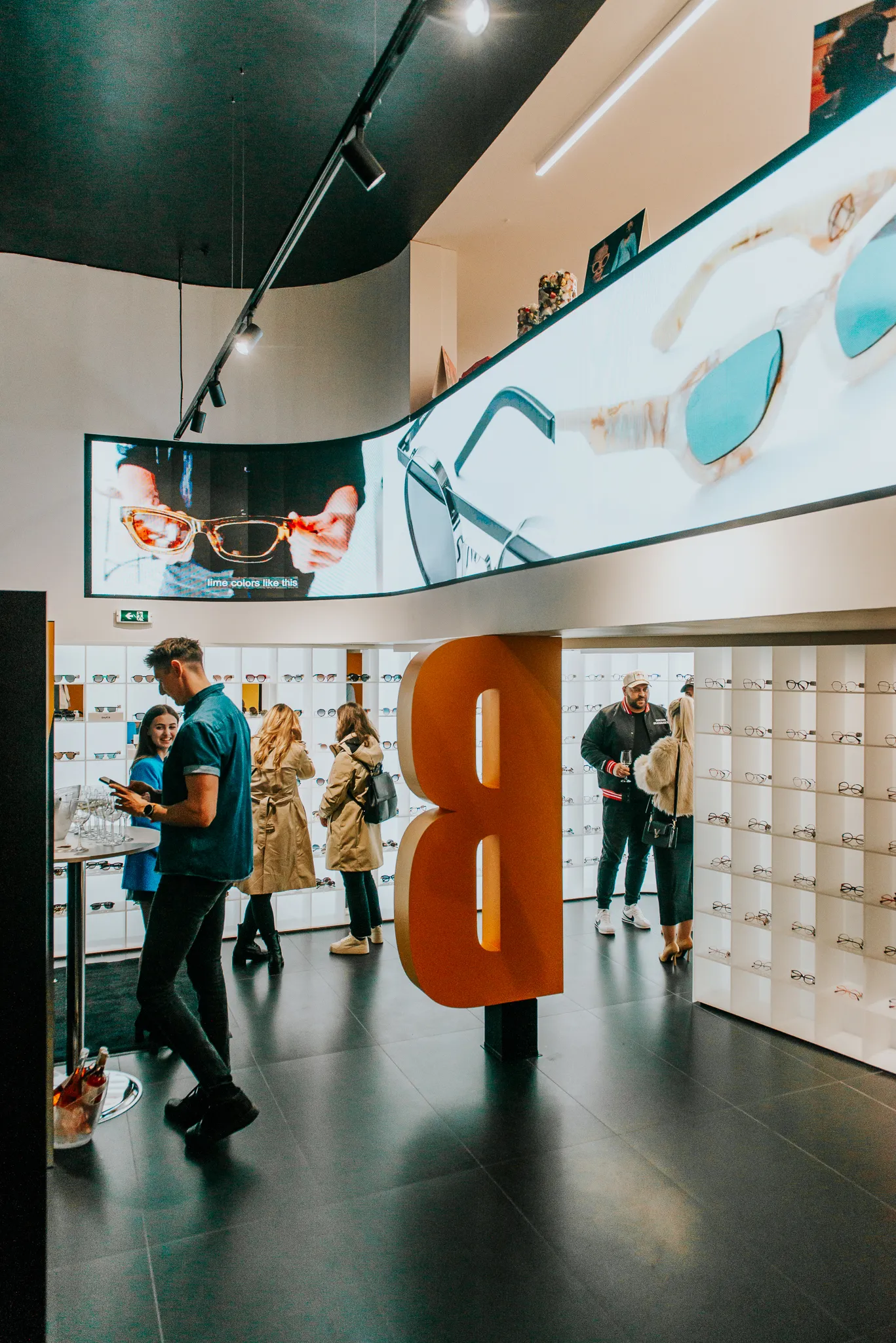
The GX Series follows the curved upper structure of the store, allowing the LED display to align with the existing architectural lines instead of interrupting them.

Installed inside Blink Optic in Bucharest, the GX Series follows the curved upper structure of the store to create a continuous indoor LED display that feels integrated with the retail architecture rather than added on as a separate screen.

This project shows how a curved indoor LED display can be designed around retail architecture. Instead of interrupting the space with a conventional rectangular screen, the GX Series follows the store's curved upper structure so brand and promotional content remains visible from multiple positions inside the shop and through the street-facing glass.
The display extends continuously along the store's curved upper structure, helping digital content become part of the interior design.
Installed inside Blink Optic in Bucharest, Romania, the GX Series LED display follows the existing architectural lines of the retail space. This creates a more integrated visual experience than a conventional flat screen placed independently on a wall.
Positioned above the product display area, the curved LED surface remains visible from different positions inside the store. Selected visuals can also be seen through the large street-facing windows, extending the store's digital presence toward the exterior.
The project uses screen geometry, elevated placement and storefront visibility to integrate moving digital content into the customer journey.
The GX Series follows the curved upper structure of the store, allowing the LED display to align with the existing architectural lines instead of interrupting them.
Positioned above the product area, the curved display can remain visible as customers move through different parts of the retail space.
Through the large glass storefront, parts of the moving visual content remain visible from outside, adding another layer of attraction to the shopfront.

In retail projects, the LED screen does not always need to behave like a separate rectangular object. When cabinet geometry and installation structure are planned around the interior, the display can follow the space and support a more continuous customer experience.
Curved installations should be coordinated with the architectural radius, cabinet geometry and available mounting structure before fabrication.
Screen height, viewing distance and content scale should be evaluated from the positions customers actually occupy inside the store.
When the display is visible through glass, content composition should account for both interior and exterior sightlines.
The supplied project source identifies the product family, application, location and installation type. It does not provide released pixel pitch, brightness, refresh rate, cabinet dimensions or total screen area, so those values are not inferred here.
Select any image to view the full-size project photo.

Send the wall or ceiling geometry, target radius, screen dimensions, viewing distance, installation drawings, service-access requirements, content resolution and project location. Uniview LED can help review the product family, cabinet layout and system configuration.